Climbing Mount Kilimanjaro
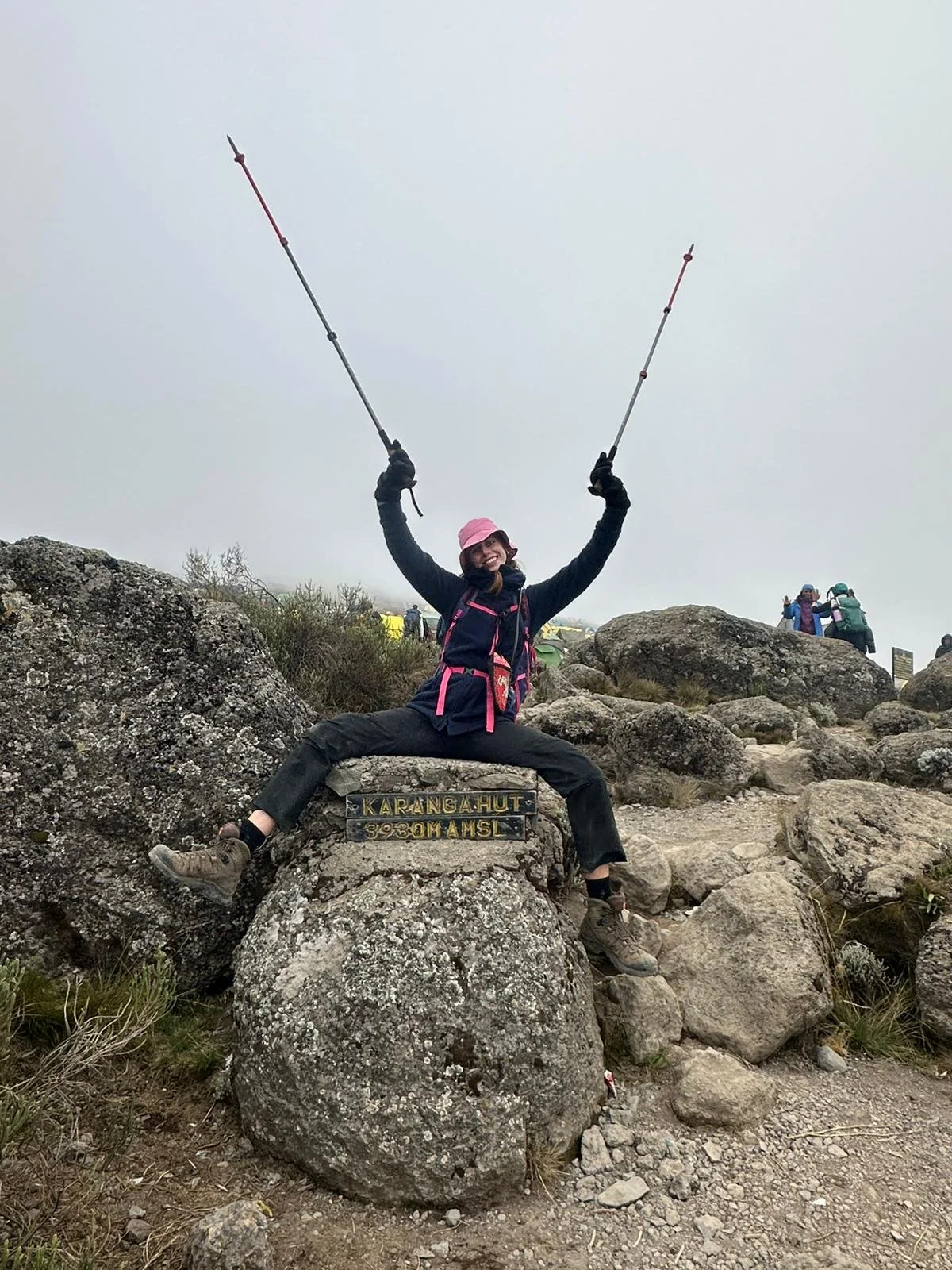
I hated hiking. For years and years and years.
I was never good at it. I could walk a flat distance for hours on end, but hiking up a mountain? I was terrible at it. I remember my sister asking if I wanted to hike a mountain in Grande Cache with her and her friend. I said sure, which was a terrible mistake and led to hours of misery. I would take five steps, my heart would race, I couldn't catch my breath, but I would keep going. It was awful. I was bad at it, which made me do it even less.
As I got older and started travelling, there were hikes I "had to do." This included an exploding volcano in Guatemala, a sulfur volcano in El Salvador, and the tallest mountain in North Africa. I nearly turned around three times in Guatemala and was the last one up. In El Salvador, I kept the whole group waiting on me. On summit day in North Africa, I cried and told the group they should leave me behind, summit without me, and pick me up on the way down.
I made it to the top of each mountain, but not without a lot of struggle, self-doubt, and suffering. Every difficult hike reinforced the idea that I just wasn't a hiker.
What changed?
After a 2.5-month trip, I came home motivated to keep up my fitness. A gym membership with classes was too expensive, so naturally my brain decided it would be easier to drive to Grande Cache 2.5 hours each way a couple of times a month and hike mountains solo. Surprisingly, that changed everything.
Instead of being the worst hiker in the group, I was the only hiker. I could stop and catch my breath without feeling embarrassed. I could eat snacks whenever I wanted. I could blast music or podcasts for motivation, which conveniently doubled as bear repellent. With every mountain, I got a little stronger. A little faster. I took fewer breaks. Most importantly, I started enjoying it. Really enjoying it.
Fast forward to last summer. My sister told me she was planning to do the West Coast Trail solo. This is not a day hike with cell service. It's seven days in the wilderness carrying everything you need on your back. She had never done an overnight backpacking trip before.
Being the amazing sister I am, I quit my 9-to-5 job to go with her. Lol. (Side note: I can't believe I worked another 9-to-5 job. When will I learn those are just not for me?)
I'd never done an overnight hike without a guide or carried all my own gear. The months leading up to it had been rough. I was working two full-time jobs, I was exhausted, skinny, and definitely not in hiking shape. What I did have was grit.
The trail wasn't easy. I finished with bruised hips and shoulders from my pack, swollen ankles, and knees that hated every step on the sand. But we got through it.
Somewhere along the West Coast Trail, the idea of climbing Kilimanjaro came up. My grandma and her sister had climbed it twenty years earlier, and it felt special to continue the tradition.
In October, while I was alone in Guatemala, I started researching it. I called my sister, and by the end of the conversation we'd decided to go. We booked the hike in January.
In November I started training.
In December we bought our plane tickets.
I trained harder than I ever had before. By the time we left, I was in the best shape of my life. Physically strong, mentally stronger.
We flew out on January 21st, landed on the 23rd, and started hiking on the 27th. I was intimidated by the mountain. More than anything, I didn't want to be the person holding everyone back. The first day was ridiculously easy, in my opinion. It gave me exactly what I needed: confidence. Maybe I could actually do this.
Day two was the hardest hiking day besides summit day. At breakfast that morning, one member of our eleven-person group announced he was quitting. He had MS, and the combination of hiking all day and sleeping in a tent had become too difficult. A few days later, another group member decided not to continue.
The hiking itself became more manageable, but the altitude started affecting people. Some were dealing with headaches, nausea, fevers, exhaustion, and sleepless nights. Every morning there seemed to be another conversation about whether someone should continue. Thankfully, my sister and I had been diligent with our altitude medication and were doing relatively well. Even so, by day six the day before summit I had developed a sore throat, a slight fever, and a cough. Not ideal timing.
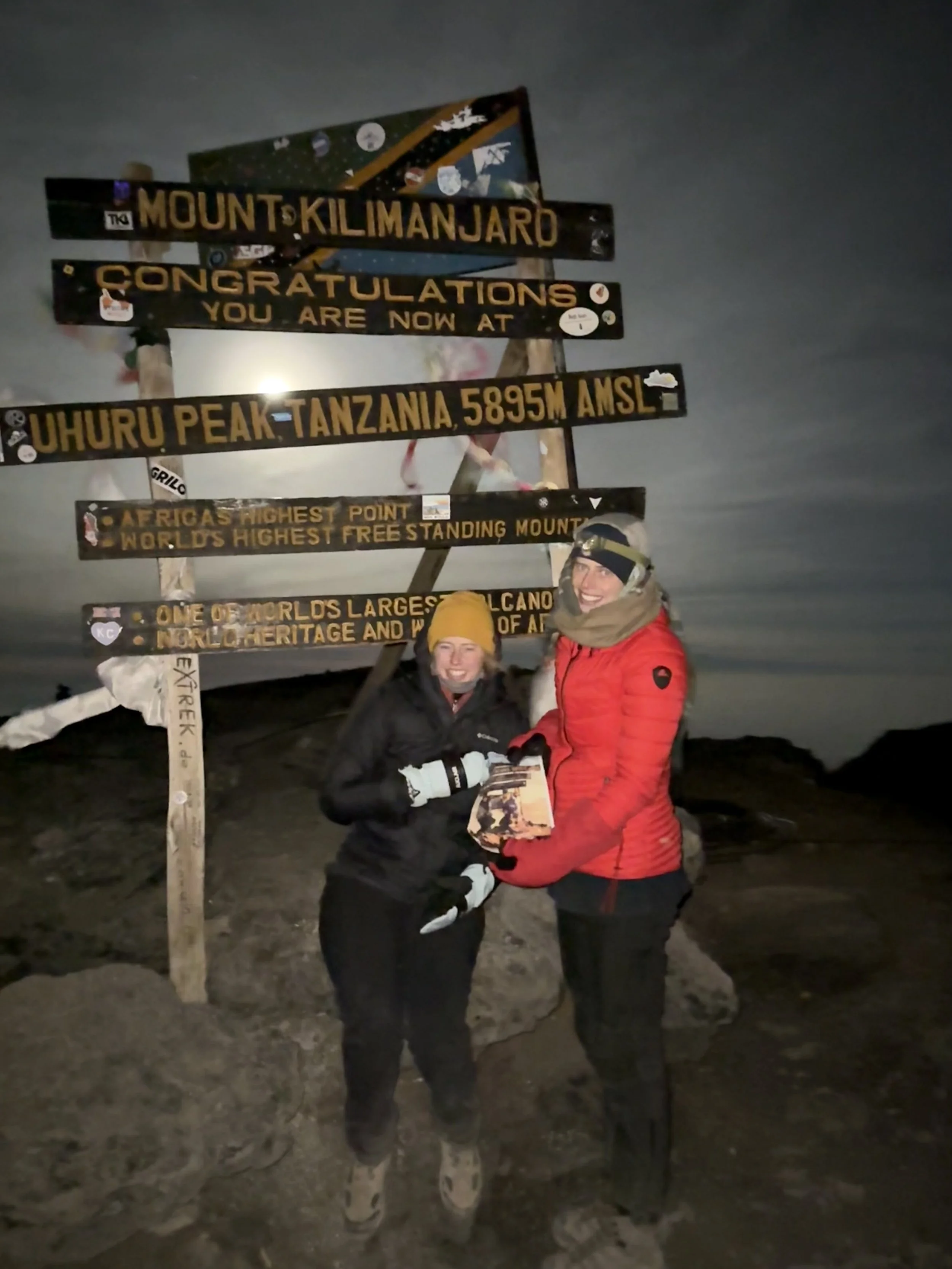
Summit day started at 11 p.m. We ate a small breakfast, put on every layer we brought, and stepped into the darkness. The path ahead was illuminated by a full moon. It was beautiful, but it was also deceiving. Three hours passed and it felt like we had barely moved. The air was thin. Every step required effort. It was bitterly cold. I was freezing.
At one point I became convinced that if I didn't move faster, I would freeze where I stood. Logically, I know that's dramatic. In the moment, it felt completely true. I asked our lead guide if we could split from the group. Reluctantly, he agreed. A young man named Martin from the Czech Republic, my sister, and I pushed ahead.
The climb from there is a bit of a blur. I remember focusing entirely on the next step. Not the summit. Not the mountain. Just one more step. Then another. Then another. For years, mountains had been places where I questioned myself. Places where I cried, wanted to quit, or wondered if I belonged there at all. Yet somehow, on the biggest mountain I'd ever attempted, I felt strong.
I wasn't trying to survive the climb. I was climbing it. As we got closer to the summit, I realized something I never thought I'd feel: I knew I was going to make it. Not hoped. Knew. When we finally reached the top, we were among the first people there. The moon was still lighting the sky. The world below us felt impossibly far away.
I looked around and couldn't quite believe it. The girl who hated hiking. The girl who was always last. The girl who once asked people to leave her behind on a mountain. She was standing on top of Kilimanjaro. I felt proud. Relieved. Grateful. Mostly, I felt overwhelmed by how far I'd come.
We took photos for about fifteen minutes before beginning the descent. One of my favourite things about hiking mountains is that on the way down you finally get to see what you've accomplished. The higher the sun rose, the more of the mountain revealed itself. Looking back at what we had climbed felt surreal.
At Martin's request, we took the descent much slower. As the sun broke over the horizon above 5,000 metres, everything glowed gold. It felt like a slice of heaven. Adding another layer to it, my grandma and her sister had stood in that exact place twenty years earlier. They had seen the same sunrise, looked out at the same landscape, and felt the same sense of wonder. That connection made the experience even more special.
We spent the next day and a half descending. If you ask my sister, going down was harder than going up. For weeks afterward, I was coughing up mucus and phlegm—a common side effect known as the mountain cough that can happen after prolonged exposure to high altitude. Other than that, my body recovered surprisingly well. I am so glad I'm doing these adventures while I'm young and my body can adapt.
It still doesn't feel entirely real that I climbed Mount Kilimanjaro. Maybe it never will. What feels even stranger is that for most of my life, I thought I hated hiking. The truth is, I hated feeling like I wasn't good at it. Somewhere between all the mountains, the self-doubt, the solo hikes, the West Coast Trail, and Kilimanjaro, I became a hiker.
And somehow, I ended up standing on top of Africa.